Today’s Industrial AI Daily Signal · Manufacturing · Humanoid robotics
Schaeffler runs six humanoids across a component line.
Schaeffler opened a Taicang lighthouse factory where six humanoid robots work across a five-station line for humanoid components, with operating data feeding a real-time digital twin.
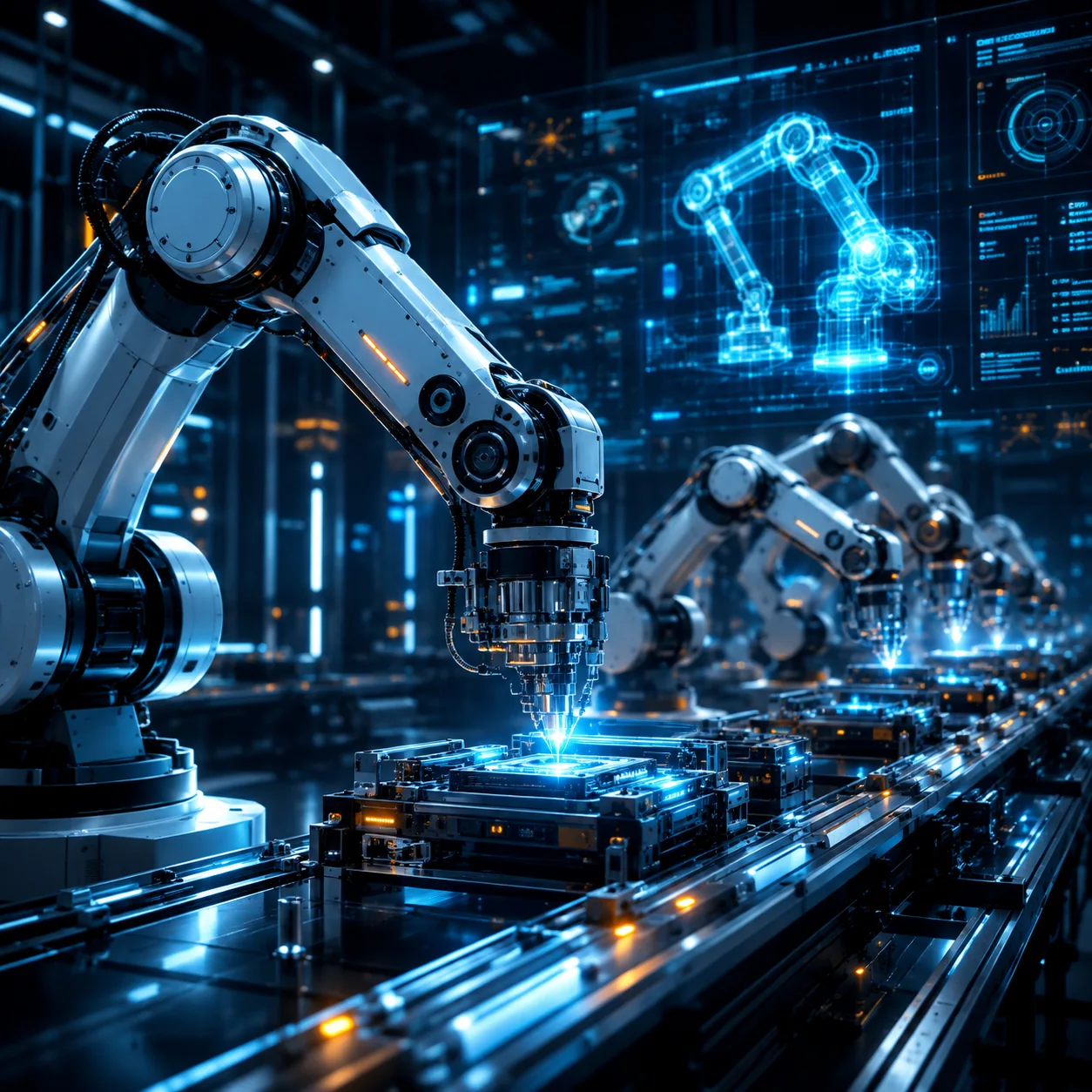
The line assembles key humanoid components, including linear and rotary actuators. Six robots stage and sort parts, perform joining work, inspect the output, apply labels and package finished components across five stations rather than operating as isolated cells.
A digital twin mirrors the physical process while sensors capture assembly accuracy, work-step duration, energy consumption and asset condition. Schaeffler says the site combines component production, robot training and data acquisition, but it has not published line throughput, first-pass yield, intervention frequency or uptime.
AI-assisted content may contain errors. Verify important facts and decisions against the linked original sources.
01
What changed
Schaeffler had announced humanoid partnerships and training programs before this week. The October 20 opening supplies a materially different operating artifact: a connected multi-robot line, defined production tasks, instrumented stations and a digital twin tied to the physical process.
02
Why it matters
Humanoid factories will not scale on impressive single-robot demonstrations. They need stable task handoffs, repeatable quality, recoverable faults and a data loop that lets teams improve behavior without disrupting production. Taicang is important because it combines those requirements in one operating line and applies them to components that will enter future robots. The narrow scope also makes the evidence more useful: engineers can measure how six machines coordinate through actual assembly and inspection steps. Schaeffler still needs to disclose sustained operating results, but this is a stronger industrial test than a staged pick-and-place demo.
03
What to watch
Watch shift-level throughput, first-pass yield, human interventions, mean time between failures, recovery after a missed handoff, energy per finished component and whether validated robot skills transfer from Taicang to Schaeffler plants elsewhere.
Schaeffler provides primary detail on the six robots, five stations, task sequence, sensor measurements and digital-twin design. Earlier company material corroborates the site's intended role. Confidence is high in the factory configuration; productivity and reliability outcomes are not yet public.
Impact score
96/100
Reader reaction
How does this development make you feel?
Sources used for this edition
Behind today’s selection
Today’s two runners-up
Runner-up 1 · Data-center infrastructure · Thermal manufacturing
Carrier puts chiller capacity on a 2027 clock.
Carrier plans a more-than-one-million-square-foot Fort Worth manufacturing and engineering center to expand U.S. production of air- and water-cooled commercial chillers.
Why it was not selected: The manufacturing commitment is large and tied to a physical AI-infrastructure bottleneck, but the plant will not begin operating until 2027 and its added unit capacity is undisclosed.
View scoring details
- Industrial relevance
- 25/25
- Operational or economic impact
- 20/20
- Technology significance
- 10/15
- Evidence of real-world adoption
- 11/15
- Strategic significance
- 10/10
- Novelty
- 8/10
- Source confidence
- 5/5
- Source reliability
- 29/30
- Independent corroboration
- 22/25
- Primary or official evidence
- 24/25
- Evidence consistency
- 16/20
Runner-up 2 · Agricultural manufacturing · Humanoid robotics
AGCO assigns Digit to parts handling at Hesston.
AGCO will pilot Agility Robotics' Digit at its Hesston, Kansas, manufacturing facility in 2027, starting with repetitive parts and tote-handling work.
Why it was not selected: The named plant and task list make the pilot operationally specific, but deployment starts in 2027 and no production results exist yet.
View scoring details
- Industrial relevance
- 25/25
- Operational or economic impact
- 17/20
- Technology significance
- 14/15
- Evidence of real-world adoption
- 10/15
- Strategic significance
- 8/10
- Novelty
- 8/10
- Source confidence
- 5/5
- Source reliability
- 29/30
- Independent corroboration
- 19/25
- Primary or official evidence
- 25/25
- Evidence consistency
- 17/20