Today’s Industrial AI Daily Signal · Robotics · Automotive manufacturing
Toyota’s automation estimate calls for 400,000 factory robots.
Toyota estimates that factory modernization across its own operations, group companies and major suppliers could require about 400,000 robots and roughly ¥1 trillion ($6.4 billion) in annual spending from 2028. The figure covers both replacement machines and new automation for production, logistics and human–robot collaboration.
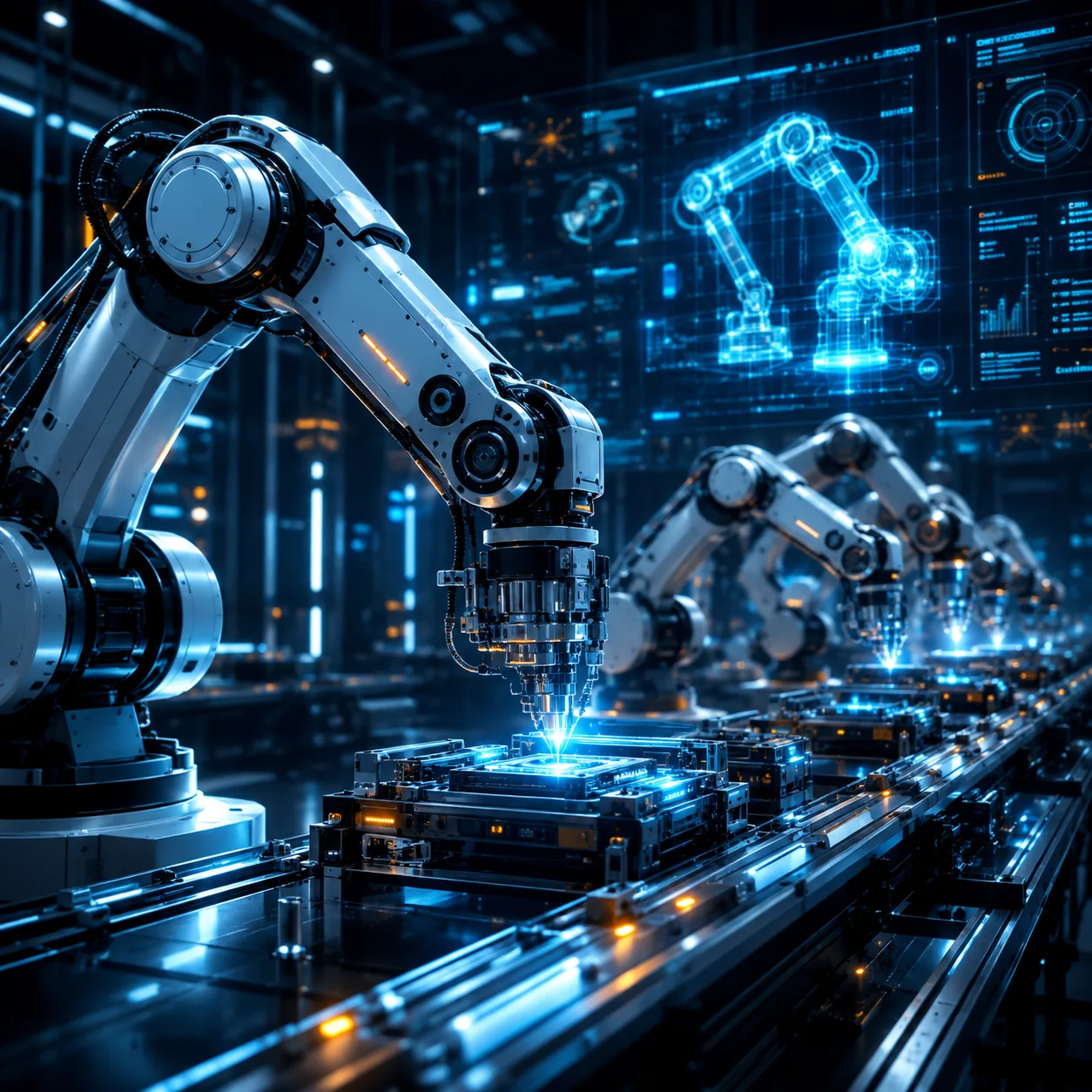
The estimate would turn automation into a network-wide capital program rather than a collection of isolated robot purchases. Toyota expects conventional industrial machines to remain central while humanoid and other newer forms of robotics enter selected workflows, with labor shortages and aging production assets providing the operational pressure.
The number is not a confirmed budget or deployment schedule. Toyota has not specified the duration of the annual spending, factory-by-factory allocation, robot mix or expected productivity return. That distinction limits adoption credit, but the estimate still exposes the integration scale that one of the world’s largest manufacturing systems is evaluating.
AI-assisted content may contain errors. Verify important facts and decisions against the linked original sources.
01
What changed
Automakers have already announced humanoid trials and factory-automation projects. What changed on September 18 is Toyota’s network-level estimate: about 400,000 robots and potential annual spending of ¥1 trillion from 2028 across Toyota, group companies and major suppliers.
02
Why it matters
A 400,000-robot program would test far more than robot supply. Plants would need controls engineering, machine vision, safety validation, tooling, maintenance capacity, data integration and redesigned material flow at unprecedented scale. It would also push automation requirements deep into Toyota’s supplier network, where capital and engineering resources vary widely. The estimate is still prospective, so it should not be treated as an approved order book. Its value is as a credible signal of the physical work required to offset labor scarcity and renew aging factories—and of where integration capacity may become the constraint before robot hardware does.
03
What to watch
Watch for board-approved budgets, supplier contracts, named plants, robot-type allocations and measurable targets for labor hours, quality, uptime and throughput. The strongest confirmation would be a phased deployment plan with installed units and production results.
Reuters reports the estimate and its scope from Toyota’s investor discussions, with consistent financial and robot-count figures. Confidence is moderated because Toyota has not confirmed a definite investment plan, disclosed its duration or published a factory-level rollout.
Impact score
89/100
Reader reaction
How does this development make you feel?
Sources used for this edition
Behind today’s selection
Today’s two runners-up
Runner-up 1 · Industrial automation · Semiconductor manufacturing
Nexperia will route power chips through Tata’s new fabs.
Nexperia and Tata Electronics agreed to manufacture power-control chips at Tata’s $11 billion semiconductor fab under construction in Dholera and to test and assemble chips at Tata’s Jagiroad packaging facility. The arrangement gives India’s emerging front-end and back-end plants a named global supplier and product family.
Why it was not selected: The agreement ties products to named plants and operating stages, but financial terms, committed wafer volume and production start dates remain undisclosed.
View scoring details
- Industrial relevance
- 25/25
- Operational or economic impact
- 18/20
- Technology significance
- 13/15
- Evidence of real-world adoption
- 10/15
- Strategic significance
- 10/10
- Novelty
- 6/10
- Source confidence
- 5/5
- Source reliability
- 30/30
- Independent corroboration
- 23/25
- Primary or official evidence
- 19/25
- Evidence consistency
- 18/20
Runner-up 2 · Smart infrastructure · Data-center connectivity
Marvell is reserving more optical-chip capacity at GlobalFoundries.
GlobalFoundries and Marvell expanded their manufacturing collaboration to increase capacity for semiconductors used in high-speed optical connections inside AI data centers. The agreement highlights a physical scaling constraint beyond accelerators: the chips and photonic interfaces that move data across increasingly large computing campuses.
Why it was not selected: The capacity expansion addresses a real data-center bottleneck, but the companies did not disclose wafer volume, contract value, delivery timing or deployed capacity.
View scoring details
- Industrial relevance
- 24/25
- Operational or economic impact
- 17/20
- Technology significance
- 13/15
- Evidence of real-world adoption
- 11/15
- Strategic significance
- 9/10
- Novelty
- 4/10
- Source confidence
- 5/5
- Source reliability
- 30/30
- Independent corroboration
- 20/25
- Primary or official evidence
- 20/25
- Evidence consistency
- 17/20