Today’s Industrial AI Daily Signal · Solar construction · Autonomous equipment
Solar robots move from field trials to a 100-unit fleet.
ARENA will provide up to A$17.8 million for a Melbourne manufacturing facility expected to support the production and deployment of around 100 LUMI autonomous solar-panel installation robots by 2029.
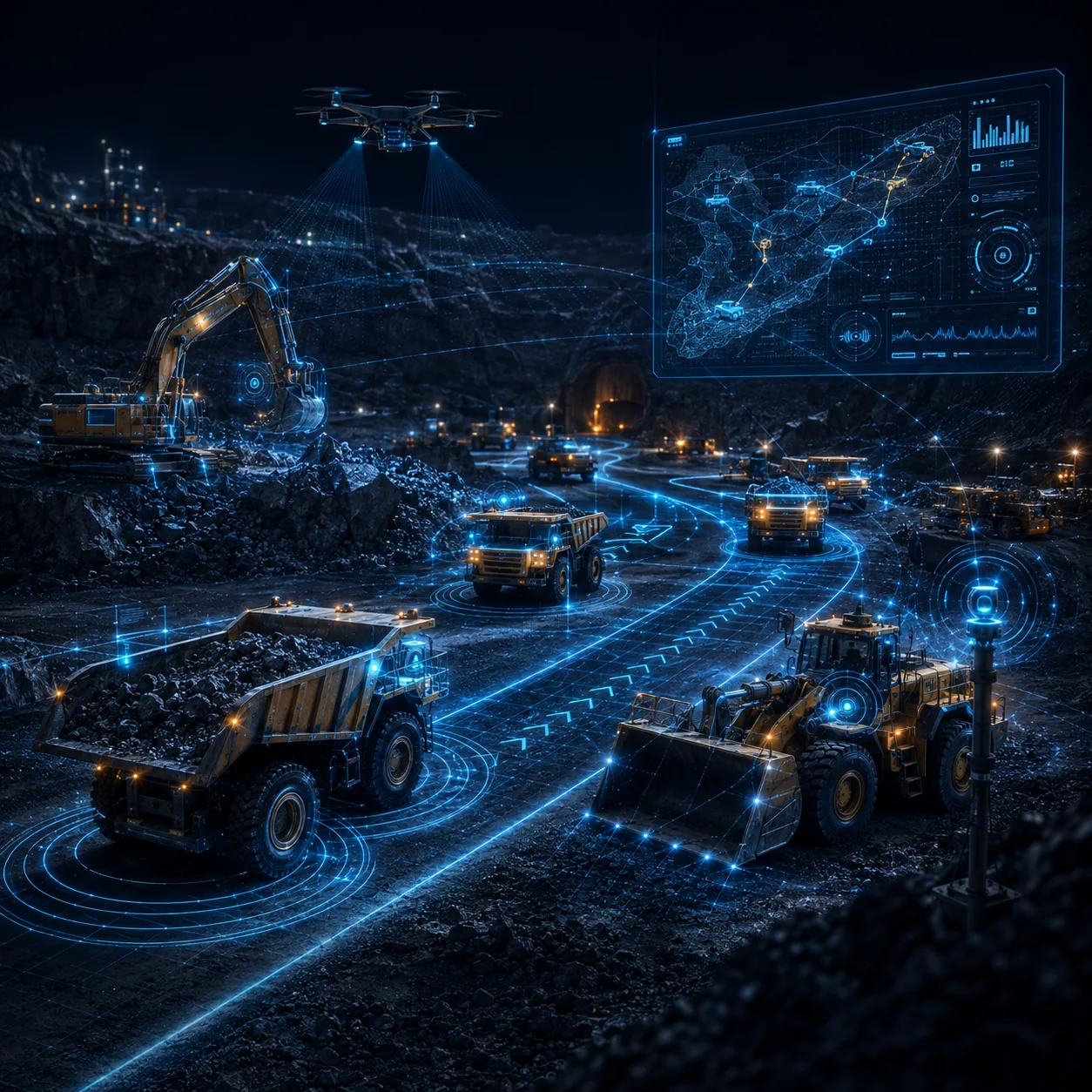
Luminous Robotics has already demonstrated LUMI robots on active solar projects in Victoria and New South Wales. The machines work alongside construction crews to lift and place modules on racking, moving a repetitive, physically demanding task from manual handling toward supervised autonomous operation.
The A$39.7 million scale-up project will add local manufacturing, deployment and field-support capability. ARENA says LUMI has installed panels as much as 3.5 times faster than current manual methods in demonstrations and could reduce solar-farm construction costs by about 6.2%; those figures remain targets that now need fleet-scale verification across different sites and conditions.
AI-assisted content may contain errors. Verify important facts and decisions against the linked original sources.
01
What changed
LUMI had already completed Australian field demonstrations. The October 13 funding decision changes the operating scale: Luminous will build a Melbourne production line, create a domestic support system and manufacture and deploy roughly 100 robots by 2029.
02
Why it matters
Utility-scale solar is constrained by more than module supply. Remote sites need crews to perform repetitive lifting and placement work safely, consistently and fast enough to meet construction schedules. A hundred-unit fleet would test whether autonomous equipment can become normal EPC capacity rather than a special demonstration. Local manufacturing and support also matter because robot uptime, spares, software updates and operator training determine whether promised installation speed survives real construction. The next evidence should come from completed megawatts, labor hours, safety incidents, intervention rates and cost per installed module across multiple projects.
03
What to watch
Watch the Melbourne facility timetable, annual production output, named project deployments, fleet utilization, panels installed per shift, human intervention and safety rates, downtime, field-support costs and whether measured project savings approach the 6.2% target.
ARENA provides the award, factory, fleet and field-demonstration evidence, while pv magazine independently reports the project value, speed claim and 2029 scale. Confidence is high in the funded manufacturing plan; fleet economics and performance remain to be proven.
Impact score
96/100
Reader reaction
How does this development make you feel?
Sources used for this edition
Behind today’s selection
Today’s two runners-up
Runner-up 1 · Shipbuilding · Industrial robotics
Fincantieri moves shipyard robotics into daily operations.
Fincantieri says its nearly €100 million BOOST² program is moving validated robotics, physical AI, digital twins and automated equipment into daily shipyard operations across a 13-yard network.
Why it was not selected: Fincantieri has real production systems and broad organizational scale, but it disclosed fewer quantified performance results than the solar-robot fleet plan.
View scoring details
- Industrial relevance
- 25/25
- Operational or economic impact
- 19/20
- Technology significance
- 13/15
- Evidence of real-world adoption
- 15/15
- Strategic significance
- 9/10
- Novelty
- 7/10
- Source confidence
- 5/5
- Source reliability
- 28/30
- Independent corroboration
- 20/25
- Primary or official evidence
- 24/25
- Evidence consistency
- 17/20
Runner-up 2 · Robot training · Spatial data
Hesai maps robot training spaces in 15 minutes.
Hesai launched Kosmo, combining an 8K spatial camera, lidar, an inertial sensor and cloud reconstruction to convert real environments into reusable 3D scenes for robot training and world-model development.
Why it was not selected: The system addresses a real training-data bottleneck and has one operating demonstration, but its wider industrial adoption and independent performance record remain limited.
View scoring details
- Industrial relevance
- 24/25
- Operational or economic impact
- 17/20
- Technology significance
- 15/15
- Evidence of real-world adoption
- 13/15
- Strategic significance
- 8/10
- Novelty
- 8/10
- Source confidence
- 5/5
- Source reliability
- 29/30
- Independent corroboration
- 24/25
- Primary or official evidence
- 24/25
- Evidence consistency
- 18/20