Runner-up · Warehouse orchestration · Physical AI
Intel and SAP connect warehouse robots to enterprise workflows.
Intel and SAP demonstrated a warehouse workflow that converts SAP Extended Warehouse Management tasks into autonomous robot missions and sends execution results back into the enterprise system.
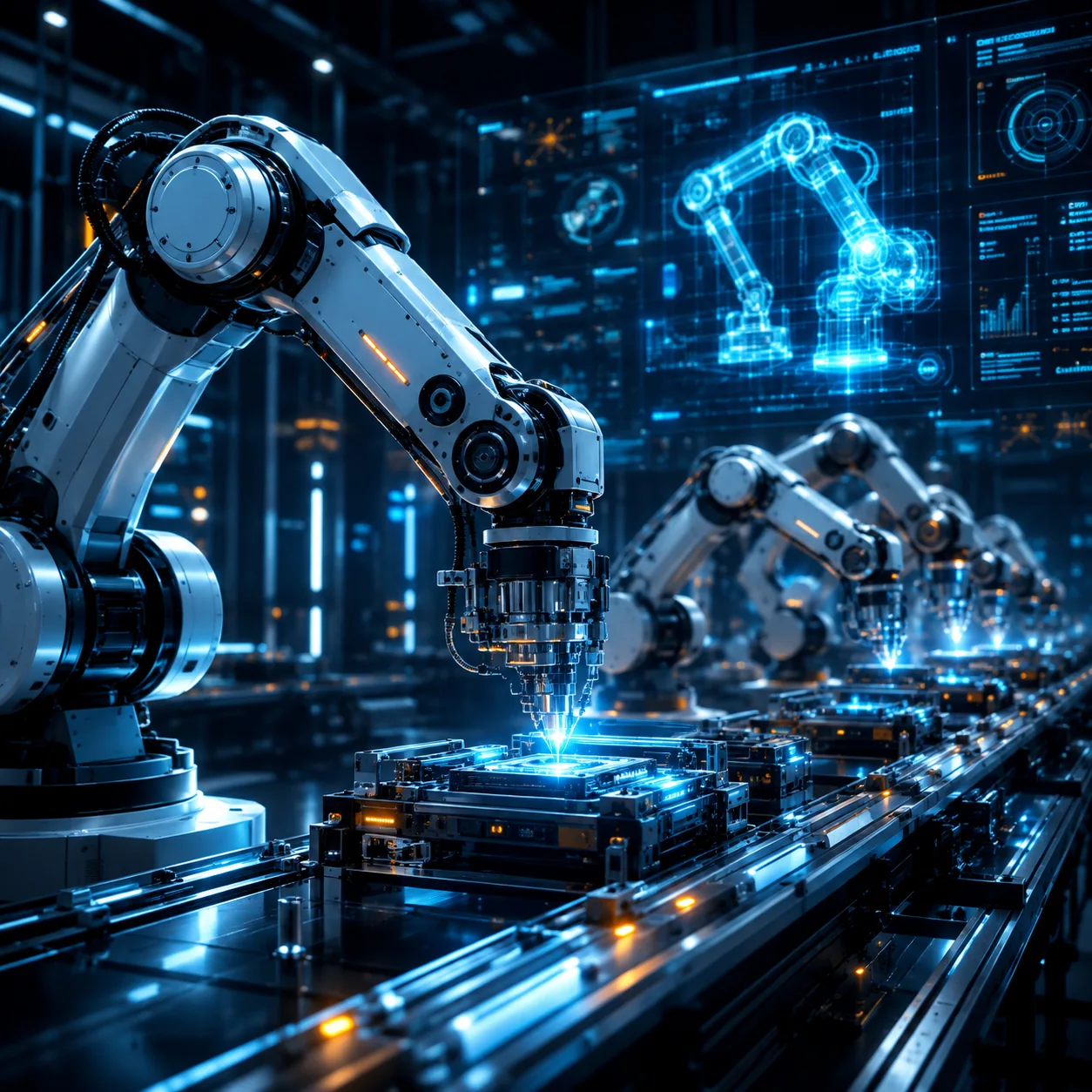
Intel and SAP demonstrated a physical-AI proof of concept at Intel's Chengdu warehouse environment. SAP Extended Warehouse Management creates a transport task with business context, Intel-powered edge software translates it into a mission for an autonomous robot and the robot's execution status returns to SAP as structured operational data.
The architecture separates the business intent from a specific robot form and uses an open software layer for orchestration, perception and fleet integration. Intel describes the site as both a proof-of-concept environment and a technology collaboration, not a production deployment. Neither company published robot count, task volume, completion accuracy, exception-recovery time, safety results or an implementation schedule for customer sites.
Read original story ↗01
What changed
SAP already offered warehouse-robot integration services, and Intel already supplied edge robotics technology. The October demonstration closes a bidirectional loop at a named physical warehouse: enterprise context generates the mission, the robot executes it and operating status returns to the same business workflow.
02
Why it matters
Warehouse automation often fragments business systems, fleet managers and robot-specific interfaces. A common orchestration layer can let operators assign work by business priority while preserving a choice of robot and edge hardware. Returning physical status to SAP also creates a record for inventory, exception management and continuous improvement. The demonstration is still early: production value depends on how the system handles blocked aisles, missing inventory, communications loss, mixed fleets, safety stops and manual overrides without corrupting the enterprise record.
03
What to watch
Watch for a production customer, robot and mission counts, sustained task-completion rate, dispatch latency, exception recovery, safety certification, WMS consistency, mixed-vendor fleet support and measurable labor or throughput results.
Why it was a runner-up
The bidirectional IT-OT workflow is technically significant, but it remains a proof of concept without production volume, uptime or customer operating results.
Impact: 83/100 · Confidence: 91/100
Intel and SAP provide consistent primary descriptions of the architecture and demonstration, and independent trade coverage confirms the warehouse workflow. Confidence is high in the proof of concept, but there is no production-scale operating evidence.
Read this edition’s Daily Signal →