Runner-up · Factory robotics · Industrial automation
Foundry opens 130,000-square-foot autonomous assembly factory.
Foundry Robotics expanded into a 130,000-square-foot Emeryville facility built around modular AI-powered robotic cells for complex industrial and commercial hardware assembly.
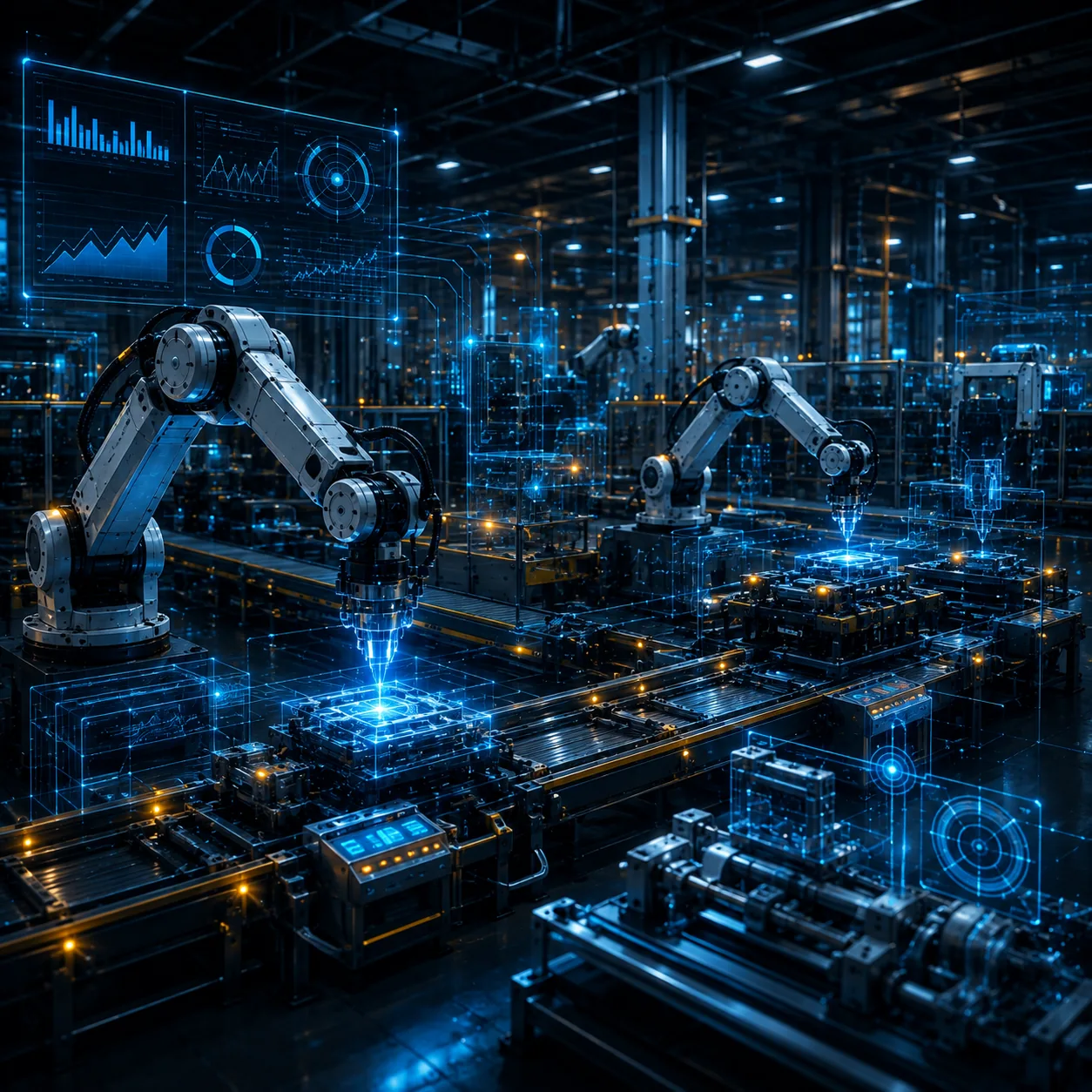
Foundry Robotics opened a 130,000-square-foot factory in Emeryville, California—about twenty times its prior manufacturing footprint. The company says the site currently serves commercial and industrial customers building complex electro-mechanical products including autonomous-vehicle subassemblies, wire harnesses, rugged computers, telecom and data-center equipment and ground robots.
Modular robotic cells use physical-AI models and local computing for assembly, while FoundryOS links robots, production schedules and factory-floor workflows. The company says it can move customer designs into production within weeks and has commissioned the first factory, but it does not disclose robot count, production volume, first-pass yield, changeover time, uptime or named customer outcomes.
Read original story ↗01
What changed
Foundry previously operated from a much smaller site and described an autonomous-factory concept. The October 28 opening creates a commissioned physical operation with a twentyfold larger footprint, current customer work and one ownership model spanning building, robotics and production software.
02
Why it matters
High-mix hardware assembly is difficult to automate because products change faster than conventional lines can be retooled. A factory organized around modular cells and shared learning could reduce the time and capital required to move a new industrial design into production. Foundry's decision to own and operate the facility matters because it puts output, quality and delivery risk on the technology provider. The announcement also includes a large funding round, but the eligible industrial development is the operating factory—not the financing. Manufacturers still need evidence that flexible cells can sustain precision, yield, uptime and economics across genuinely different products.
03
What to watch
Watch named commercial customers, active cell and robot counts, production volume, time from design to first article, changeover duration, first-pass yield, human intervention, uptime, unit cost and whether the same cell handles multiple products in normal operations.
Why it was a runner-up
The physical factory and signed customers make this more than a funding story, but the company has not disclosed output, cycle time, robot count or customer results.
Impact: 88/100 · Confidence: 82/100
Foundry's factory page and release provide direct facility, system and current-customer claims, while independent commercial-real-estate reporting corroborates the move and physical site. Confidence is moderated because operating metrics and customer identities are not public.
Read this edition’s Daily Signal →